
Shemoneh Esrei: A Comprehensive Overview (as of 03/26/2026)
Maggid Books publishes a hardcover edition, ISBN 9781592646081, with 236 pages; exploring faith through the Amidah prayer, available as a PDF.
Historical Development of the Shemoneh Esrei
The Shemoneh Esrei, initially comprising eighteen blessings, evolved over time from earlier biblical precedents. Its core structure emerged during the Second Temple period, solidifying as a central component of Jewish liturgy. Originally, the prayer focused on core themes of praise, petition, and thanksgiving, reflecting the community’s relationship with God.
Over centuries, additions were incorporated, notably during the persecutions of the Roman Empire, leading to the current nineteen blessings. These additions addressed specific needs and concerns of the Jewish people, demonstrating the prayer’s adaptability and responsiveness to historical circumstances. Studying resources, including those available as a PDF, reveals this fascinating evolution.
Rabbinic discussions and interpretations further shaped the Shemoneh Esrei, establishing its precise wording and order. The prayer’s enduring presence in daily Jewish life underscores its significance as a testament to faith and continuity. Accessing scholarly works, often found in PDF format, provides deeper insight into this historical journey.
Original Eighteen Blessings & Subsequent Additions
The Shemoneh Esrei began with eighteen core blessings, addressing fundamental themes of praise, kingship, ancestral covenant, and requests for sustenance and well-being. These initial blessings established a framework for personal and communal supplication, reflecting core tenets of Jewish belief. Detailed analyses, often available as a PDF resource, explore the nuances of each original blessing.
Later, during times of Roman persecution, a blessing condemning heretics and apostates was added, expanding the prayer to nineteen blessings. This addition reflected the pressing need to address external threats and reaffirm Jewish identity. Examining historical context, through sources like a comprehensive PDF guide, illuminates the rationale behind this change.
Further rabbinic interpretations and adjustments refined the prayer’s wording and structure, solidifying its current form. Understanding these additions and their historical context is crucial for appreciating the Shemoneh Esrei’s depth and enduring relevance. Many scholarly works offer this insight in accessible PDF formats.
The Amidah: Standing Before God
The Amidah, also known as the Shemoneh Esrei, derives its name from the posture of prayer – standing in reverence before God. This silent, standing prayer is central to Jewish daily services, recited three times: morning, afternoon, and evening. It’s a deeply personal encounter, a direct address to the Divine. Resources, often available as a downloadable PDF, emphasize the importance of kavanah – focused intention – during recitation.
The act of standing symbolizes humility and submission, acknowledging God’s sovereignty. The silence allows for introspection and heartfelt connection. Studying the Amidah, perhaps using a detailed PDF guide, reveals layers of meaning embedded within its nineteen blessings.
The Shemoneh Esrei isn’t merely a recitation of words; it’s an opportunity to cultivate a conscious relationship with God. Many PDF resources offer translations and commentaries to enhance understanding and deepen this spiritual experience, fostering a more meaningful connection.
Structure of the Shemoneh Esrei
The Shemoneh Esrei, originally eighteen blessings (now nineteen on Sabbaths and Festivals), follows a distinct structure. It begins with three blessings of kingship, acknowledging God’s rule and power. These are followed by the central section – the intermediate blessings – encompassing requests for wisdom, repentance, favor, healing, and sustenance. These are often detailed in PDF study guides.
The prayer concludes with three blessings of gratitude: the ancestral blessings, recalling God’s promises to Abraham, Isaac, and Jacob, and finally, petitions for acceptance and peace. A PDF version of the prayer often includes the Hebrew text alongside transliteration and translation.
Understanding this structure, readily available in comprehensive PDF resources, is key to appreciating the flow and thematic unity of the Amidah. Rabbi Feuer’s book, available for purchase, also details this structure.
The Three Sections: Blessings of Kingship, Ancestral Blessings, and Requests

The Shemoneh Esrei is thoughtfully divided into three core sections, each serving a distinct theological purpose. The initial blessings of kingship firmly establish God’s sovereignty and absolute power, a foundational concept explored in detail within PDF study materials;
The subsequent ancestral blessings beautifully commemorate God’s enduring covenant and promises made to Abraham, Isaac, and Jacob. These blessings highlight the historical relationship between God and Israel, often annotated in accessible PDF guides.
Finally, the central section comprises a series of heartfelt requests, encompassing personal and communal needs – wisdom, forgiveness, healing, and sustenance. Many PDF resources offer detailed explanations of each request, aiding deeper understanding and meaningful recitation of the Amidah.
Blessings of Kingship: Establishing God’s Sovereignty
The opening blessings of the Shemoneh Esrei powerfully assert God’s absolute kingship, a central tenet of Jewish faith. These blessings, readily available for study in comprehensive PDF guides, proclaim God’s power, majesty, and eternal reign over all creation.
Key phrases emphasize God’s unique nature – the “King, Ruler, and Judge” – reinforcing the divine authority that underpins the entire prayer. Exploring these concepts through detailed PDF analyses reveals the profound theological implications of acknowledging God’s sovereignty.
These initial blessings aren’t merely declarations; they are affirmations of faith, setting the stage for the subsequent petitions. Many PDF resources highlight how these affirmations shape the supplicant’s approach to prayer, fostering humility and reverence before the Divine King.
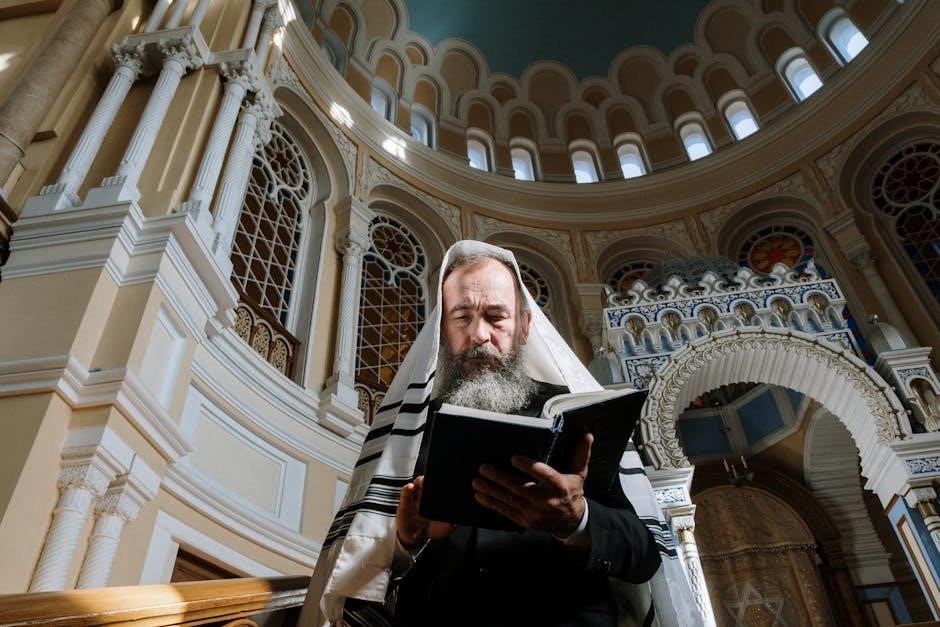
Ancestral Blessings: Remembering God’s Promises

Following the affirmations of Kingship, the Shemoneh Esrei transitions to blessings honoring the Patriarchs – Abraham, Isaac, and Jacob. These blessings, thoroughly examined in available PDF study guides, aren’t simply historical recollections; they are powerful reminders of God’s covenantal promises to our ancestors.
By invoking their names, we reaffirm our connection to this enduring legacy and acknowledge God’s faithfulness throughout generations. Detailed PDF resources explain how these blessings link the present to the past, grounding our prayers in a rich historical context.

These ancestral blessings also serve as a source of hope and encouragement, reminding us that we are part of a continuous chain of faith. Studying these sections via PDF allows for a deeper understanding of the enduring relationship between God and the Jewish people.
Detailed Examination of Key Blessings

A comprehensive understanding of the Shemoneh Esrei requires a close look at individual blessings. Numerous PDF resources, including works by Rabbi Avrohom Chaim Feuer, offer detailed analyses of each section. These guides illuminate the nuances of the Hebrew text and the theological concepts embedded within.
For example, the Blessing of Knowledge (Da’at), explored in depth in available PDF studies, isn’t merely a request for information, but a plea for divine understanding. Similarly, the Blessing of Repentance (Teshuvah), detailed in PDF format, emphasizes the importance of self-reflection and seeking forgiveness.
These PDF materials often trace the origins of phrases back to biblical verses, revealing the deep roots of the Amidah. Accessing these resources enhances the prayer experience, transforming recitation into informed and meaningful engagement.
Blessing of Knowledge (Da’at): Understanding Divine Wisdom
The Blessing of Knowledge (Da’at), a pivotal element within the Shemoneh Esrei, isn’t simply a request for intellectual capacity. PDF resources dedicated to the Amidah reveal it as a profound plea for divine insight and understanding of God’s ways. This blessing acknowledges that true wisdom originates from a higher source.
Detailed PDF analyses highlight how this blessing connects to biblical themes of seeking God’s guidance and fearing the Lord, which is the beginning of wisdom. It’s a recognition of human limitations and a yearning for a deeper connection with the divine intellect.
Studying this blessing through available PDF guides, like those by Rabbi Ezra Bick, fosters a richer appreciation for its theological depth and encourages a more mindful prayer experience.
Blessing of Repentance (Teshuvah): Seeking Forgiveness
The Blessing of Repentance (Teshuvah) within the Shemoneh Esrei is a cornerstone of the prayer, and PDF resources emphasize its central role in the Jewish faith. It’s not merely an admission of wrongdoing, but a sincere plea for forgiveness and a commitment to future righteousness.
PDF studies of the Amidah demonstrate how this blessing reflects the core Jewish belief in teshuvah – the ability to return to God. It acknowledges human fallibility and the constant need for self-reflection and improvement.
Resources like those from Chabad.org, often available as PDF downloads, explain the nuanced language of the blessing, highlighting its power to purify the soul and restore the relationship with the Divine. Understanding this blessing through PDF guides deepens the prayer experience.
Blessing of Divine Favor (Ratson): Requesting Acceptance
The Blessing of Divine Favor (Ratson), a vital component of the Shemoneh Esrei, is frequently explored in PDF study guides dedicated to the Amidah prayer. It transcends a simple request; it’s a heartfelt appeal for God’s acceptance of our prayers, actions, and intentions.
PDF resources, like those offered by TheRebbe.org, illuminate how this blessing embodies the Jewish understanding of a covenantal relationship with God. We don’t demand favor, but humbly request it, acknowledging our dependence on Divine grace.
Analyzing the text via PDF materials reveals the subtle nuances of the language, emphasizing the importance of sincerity and a pure heart. Rabbi Bick’s work, often available in PDF format, details how this blessing prepares us for receiving God’s blessings.
Blessing of Healing (Refuah): Praying for Well-being
The Blessing of Healing (Refuah) within the Shemoneh Esrei is a powerful plea for physical and spiritual well-being, frequently detailed in comprehensive PDF guides on the Amidah. These PDF resources emphasize that “healing” extends beyond physical ailments, encompassing wholeness of the soul.
Study materials, often available as a PDF download from sites like Chabad.org, explain how this blessing reflects a deep faith in God’s compassionate nature and power to restore. It’s a universal prayer, applicable to personal needs and the suffering of others.
Rabbi Feuer’s work, accessible in PDF format, provides a nuanced understanding of the blessing’s language, highlighting its connection to Divine providence. The PDF often includes interpretations and historical context, enriching the prayer experience.
Recitation and Observance
The Shemoneh Esrei, or Amidah, is recited three times daily – morning, afternoon, and evening – forming the core of Jewish prayer, often detailed in accessible PDF guides. These PDF resources emphasize the importance of standing (Amidah means “standing”) respectfully and focusing intention during recitation.
PDF study materials explain the role of the Sheliaḥ Ẓibbur (prayer leader) who repeats the prayer aloud during public worship, with variations in the text, notably the Ḳedushshah replacing part of the third blessing.
Variations exist between weekday and Sabbath/Festival recitations, comprehensively outlined in PDF versions of Rabbi Feuer’s work. Learning the Shemoneh Esrei, even gradually – as one individual described learning it “brachot by brachot” – is encouraged, with many resources available as a convenient PDF.
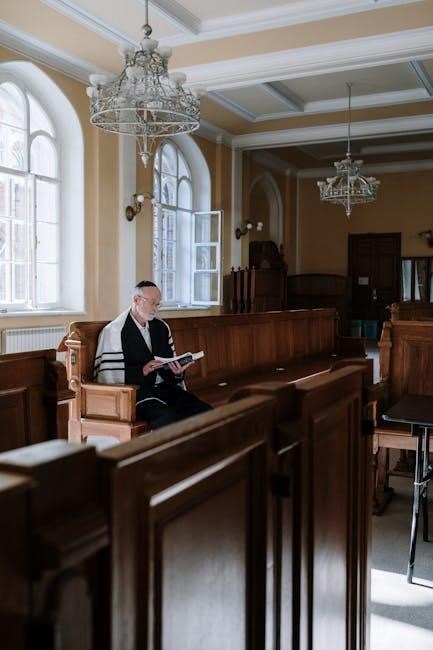
Daily Recitation: Morning, Afternoon, and Evening
The Shemoneh Esrei, central to Jewish daily prayers, is recited three times each day: during Shacharit (morning), Mincha (afternoon), and Ma’ariv (evening) services. Many PDF guides detail the specific nuances of each service’s recitation.
These PDF resources often highlight that the morning recitation includes additional Pesukei d’Zimra (verses of praise) before the Amidah. Afternoon prayers have a slightly altered emphasis, and evening prayers conclude the day with gratitude.

PDF study aids emphasize the consistency of the core Shemoneh Esrei text across all three services, though slight modifications occur on Sabbaths and Festivals. Individuals can find complete texts and transliterations within these readily available PDF documents, facilitating consistent daily practice.
The Role of the Sheliaḥ Ẓibbur (Prayer Leader)
The Sheliaḥ Ẓibbur, or prayer leader, holds a crucial role in communal worship, repeating the Shemoneh Esrei aloud for the congregation. Many PDF guides detail the specific responsibilities and pronunciations expected of the leader.
During public worship, the Sheliaḥ Ẓibbur’s repetition isn’t a verbatim echo; the third blessing is replaced with the Ḳedushshah, except for the concluding phrase. PDF resources often provide the correct text for both the leader and the congregation’s responses.
These PDF materials emphasize the importance of clear articulation and proper intention for the Sheliaḥ Ẓibbur. Learning resources, available as PDF downloads, assist aspiring leaders in mastering the nuanced recitation and fulfilling this vital communal function.
Variations in Recitation: Weekdays vs. Sabbaths and Festivals
The Shemoneh Esrei’s recitation isn’t uniform; variations exist between weekdays, Sabbaths, and Festivals. Comprehensive PDF guides detail these differences, aiding accurate observance. Weekday prayers maintain the standard 19 blessings, while Sabbaths and Festivals introduce additions or modifications.
PDF resources highlight specific insertions on Sabbaths, like the prayer “Mi Bon Nishtan,” and on Festivals, unique prayers reflecting the holiday’s theme. These PDF documents often present side-by-side comparisons, clarifying the textual changes.

Understanding these nuances is crucial for proper prayer. Many PDF study aids offer transliterations and explanations, making the variations accessible. Mastering these distinctions, readily available in PDF format, enhances the depth and meaning of the Shemoneh Esrei.

Shemoneh Esrei in Jewish Thought & Theology
The Shemoneh Esrei isn’t merely a recitation of requests; it embodies core tenets of Jewish belief. PDF studies reveal how the prayer reflects faith, God’s relationship with Israel, and humanity’s place in the world. Rabbi Ezra Bick’s work, often available as a PDF, explores these foundations.
The prayer’s structure, detailed in numerous PDF guides, mirrors theological concepts. Each blessing, when analyzed through a theological lens – accessible in PDF format – unveils layers of meaning. It’s a dialogue, a confession, and a reaffirmation of covenant.
PDF resources demonstrate how the Shemoneh Esrei encapsulates Jewish perspectives on divine wisdom, repentance, and acceptance. Studying these PDF materials deepens understanding of the prayer’s profound theological implications, enriching the spiritual experience.
Foundations of Jewish Belief Embedded Within the Prayer
The Shemoneh Esrei, readily studied via PDF resources, isn’t simply a set of petitions. It’s a concentrated expression of fundamental Jewish beliefs. Examining the prayer’s wording, often detailed in accessible PDF guides, reveals embedded concepts of faith and divine sovereignty.
PDF analyses highlight how the blessings articulate the unique relationship between God and the Jewish nation, a central tenet of Judaism. The prayer’s structure, explored in various PDF studies, reinforces this covenantal bond.
Furthermore, the Shemoneh Esrei, as presented in PDF format, addresses human needs and desires within a theological framework. It acknowledges both individual and communal aspirations, grounding them in a belief in a responsive and compassionate God. These beliefs are foundational and readily available in PDF form.
The Shemoneh Esrei as a Reflection of the Relationship Between God and Israel
The Shemoneh Esrei, accessible through numerous PDF resources, powerfully embodies the covenantal relationship between God and Israel. Each blessing, meticulously analyzed in PDF commentaries, reflects a facet of this enduring bond. The prayer isn’t a monologue, but a dialogue – a structured conversation with the Divine.
PDF studies demonstrate how the blessings acknowledge God’s past acts of kindness and anticipate future redemption, reinforcing the historical narrative central to Jewish identity. The Amidah, often available as a downloadable PDF, expresses both gratitude and supplication.
Through its carefully chosen language, readily available in PDF translations and interpretations, the Shemoneh Esrei affirms God’s sovereignty while simultaneously recognizing Israel’s role as a chosen people. This reciprocal relationship is a core theme, easily explored via PDF materials.
Resources for Studying the Shemoneh Esrei (Books & Websites)
Numerous resources aid in understanding the Shemoneh Esrei, with many available as convenient PDF downloads. Maggid Books offers Rabbi Ezra Bick’s work, exploring faith through the Amidah, often found in PDF format. Rabbi Avrohom Chaim Feuer’s book, “Shemoneh Esrei / The Amidah,” is also widely available.
Online, Chabad.org and TheRebbe.org provide extensive articles, videos, and audio classes – some downloadable as PDF study guides. ChabadU offers focused classes, potentially with accompanying PDF materials. Websites often host PDF versions of the prayer itself, with translations and commentaries.
Exploring these resources, including readily accessible PDF documents, deepens appreciation for the prayer’s nuances. Searchable PDF texts allow for focused study of specific blessings and their historical context, enhancing the prayer experience.